


HOW ARE STRESS BALLS PRINTED
There are four different print methods for printing onto stress balls. The print method which is used is selected based on the shape and or print area of the stress ball and also depending on the artwork requirement. This page details the print processes we use to create custom printed stress balls.
TAMPO / PAD PRINTING
-

INK IS APPLIED TO
THE PAD -

THE PAD IS PRESSED ONTO
THE STRESS SHAPE -

THE INK IS TRANSFERRED
FROM THE PAD TO THE SHAPE -

AN EXAMPLE OF PAD
PRINTING
A tampo or pad print is where a suitable ink is transferred from a printing plate, using a silicone pad (hence the common name of pad print) and onto a product. Due to the flexibility of the pad it allows prints to be on curved stress balls whilst keeping a large print area and minimising distortion.
Only solid colours can be printed using this pad printing which means tints or gradients are not possible (please see digital UV printing). A tampo / pad printing machine is operated by hand and each colour is layered up individually so there may be slight movement between print colours. Pad printing is the most common print method we use and all of the printable areas shown on this website are based on this method.
FLEXIBLE TRANSFER PRINTING
-

THE DESIGN IS PRINTED
ONTO THE TRANSFER -

THE TRANSFER IS APPLIED
TO THE STRESS SHAPE -

THE BACKING IS REMOVED
LEAVING THE DESIGN -

AN EXAMPLE OF FLEXIBLE
TRANSFER PRINTING
All of our UK manufactured products are printed with a premium flexible transfer print which allows us to print an unlimited number of colours whilst keeping finer details and tight registration between colours. As the name suggests the flexible transfer print uses ink which is designed to flex with the surface of the stress ball.
To print the stress balls the artwork is separated into individual colours and then each colour of ink is screen printed onto a transfer release paper. A heat reactive clear adhesive is then added to the back of the printed image which overlaps the ink, once applied to the stress ball this anchors the image to the item and minimises the risk of peeling. The transfer is then applied to the stress ball using a heat press, which activates the adhesive layer bonding it to the stress ball.
SCREEN PRINTING
-

INK IS APPLIED TO
THE SCREEN -
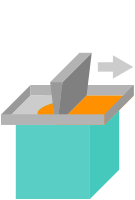
THE INK IS SQUEEZED
THROUGH THE MESH... -
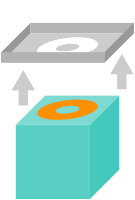
...LEAVING THE
DESIGN BEHIND -

AN EXAMPLE OF SCREEN
PRINTING
Screen printing is ideal for stress balls with flat surfaces and are often used on the cube stress balls. A mesh screen is coated with a photo sensitive emulsion and an image of the logo is then placed onto this mesh. The screen is then subjected to ultraviolet light which cures the screen leaving only the logo showing through the mesh. The ink is then passed through the screen directly onto the stress ball. Only one colour can be printed at a time using this method and if multiple colours are required the process must be repeated with a new screen.